
HeritACT’s Final Gathering in Elefsina: From Closing to Continuity
What if the places we pass every day without noticing, the abandoned water factory, the demolished church at the city’s edge, the quiet civic square in front of the newly rebuilt old fishermen’s house, were not remnants of a fading past, but starting points for climate action, creativity, and collective resilience? What if heritage was not something to protect from change, but something that could help us navigate it?
This is precisely the question HeritACT set out to explore. And now, as the project reaches its end, we are able to open the door to what this journey has looked like behind the scenes.
Last week, HeritACT reached a meaningful threshold.
Over three intense days in Elefsina, the project moved between reflection and action, between looking back and stepping forward. What unfolded from Thursday to Saturday was not simply a sequence of events, but a condensed expression of what HeritACT has been about from the very beginning: starting from meaning rather than solutions, and allowing heritage to act as a living force shaping more inclusive and meaningful urban futures.
One last round to exchange results
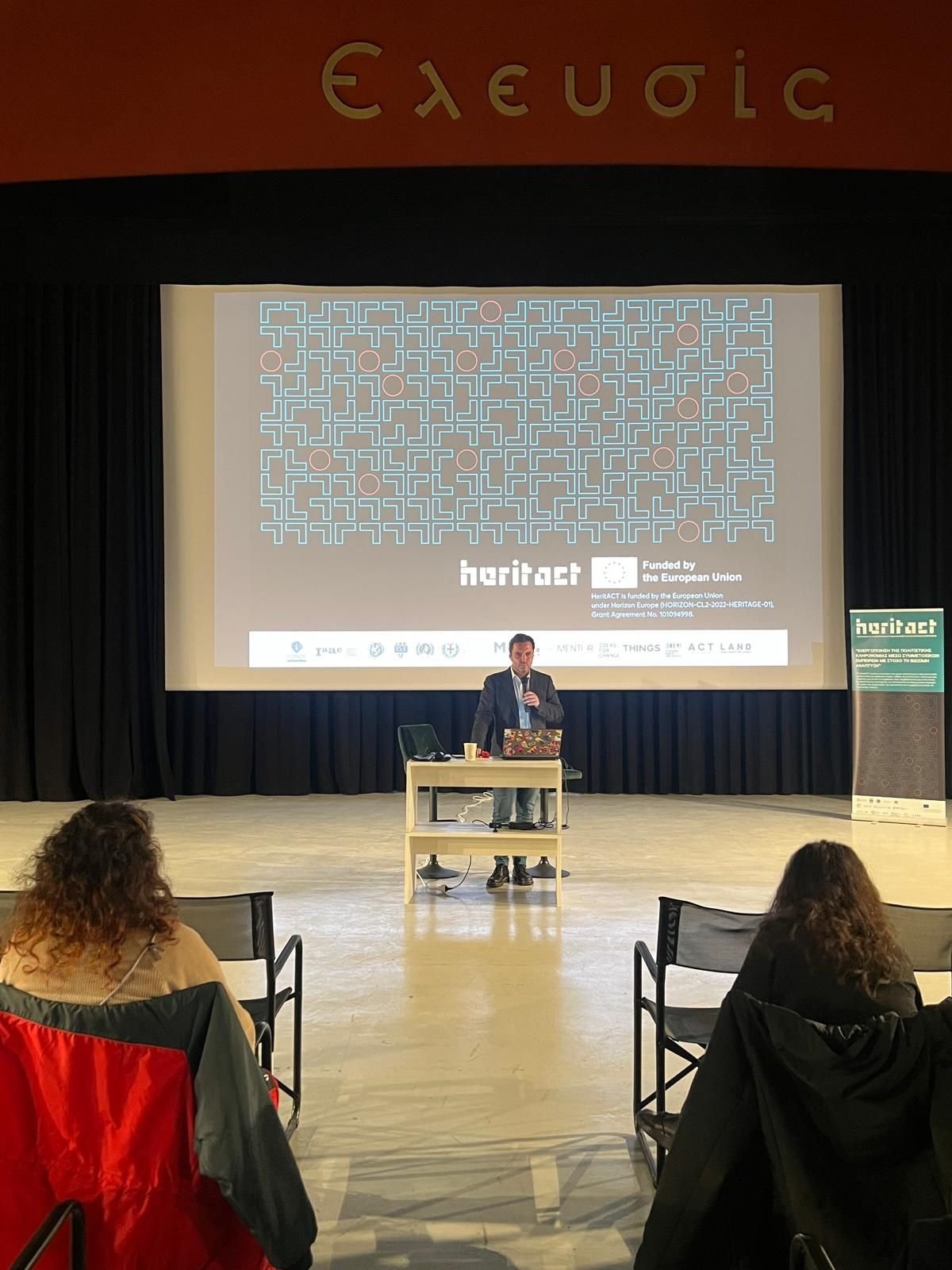
The final General Assembly brought the consortium together one last time in Elefsina’s cinema, a space that had remained closed for 35 years and was reborn in 2023 as part of the city’s European Capital of Culture journey. The choice of venue was far from symbolic coincidence. It embodied precisely what HeritACT has explored over the past three years: how heritage spaces can be reactivated not as static monuments, but as collective infrastructures for civic life.
This final gathering was an opportunity to look back, take stock, and close a formal project chapter that has deeply shaped everyone involved. What began as a group of partners aligned around a shared ambition, bridging the past and the future of cities through cultural heritage, gradually evolved into something much deeper. A shared learning journey built on listening, co-creating, experimenting, and continuously adapting across places, cultures, and communities.
HeritACT was never only about developing tools, frameworks, or technical solutions. It was, and it remains, about understanding what people value, what they fear losing, and what they hope to carry forward. It is about recognising that heritage is not inherited passively, but continuously negotiated, practiced, and reimagined in everyday life.
Reaching the end of the project timeline is not feeling like an ending. It feels like a moment of collective clarity: the work now lives in places, relationships, practices, and futures that extend beyond the project itself.
Open NEB Day: understanding how to enhance sustainability, inclusion and beauty
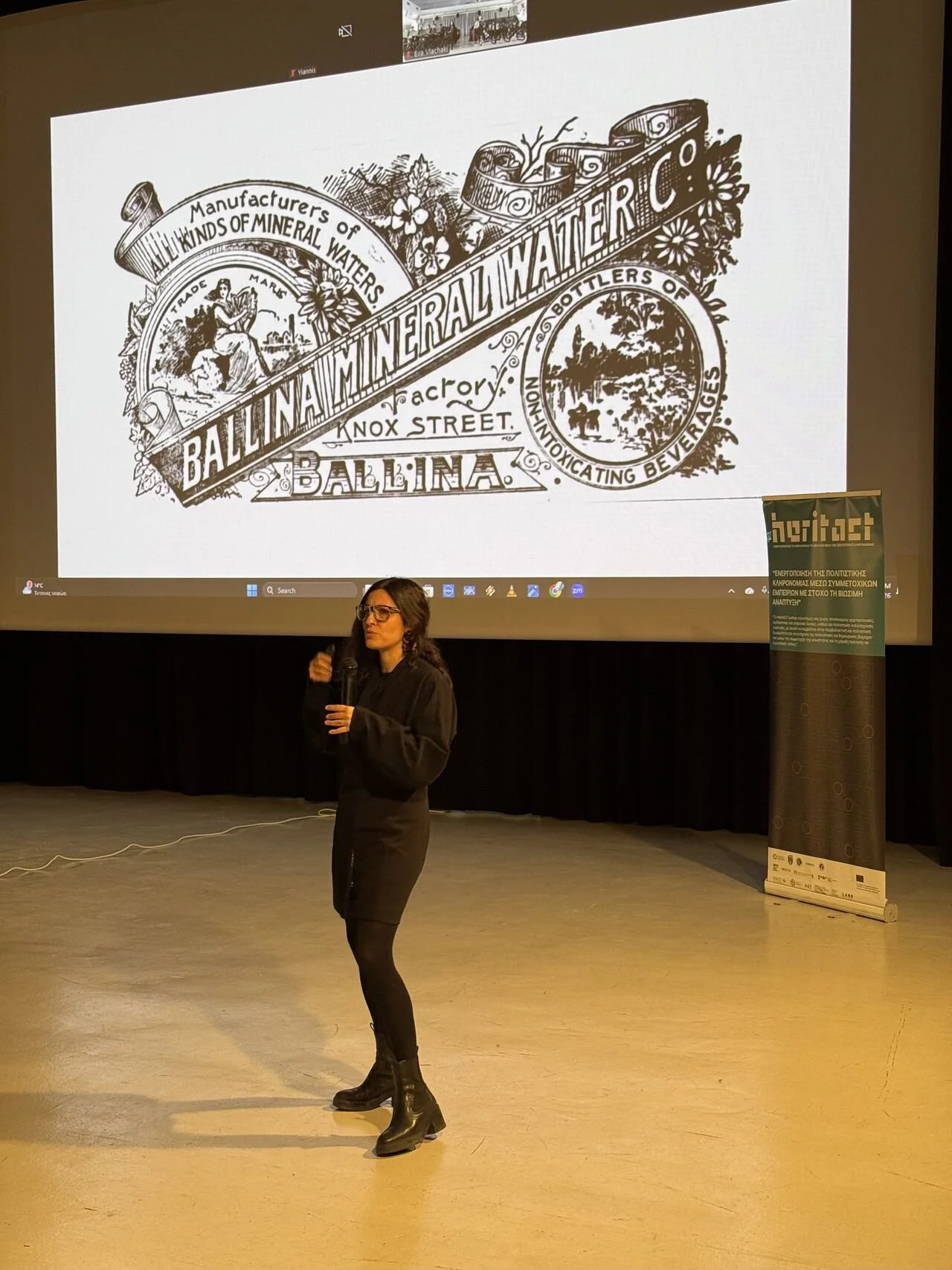
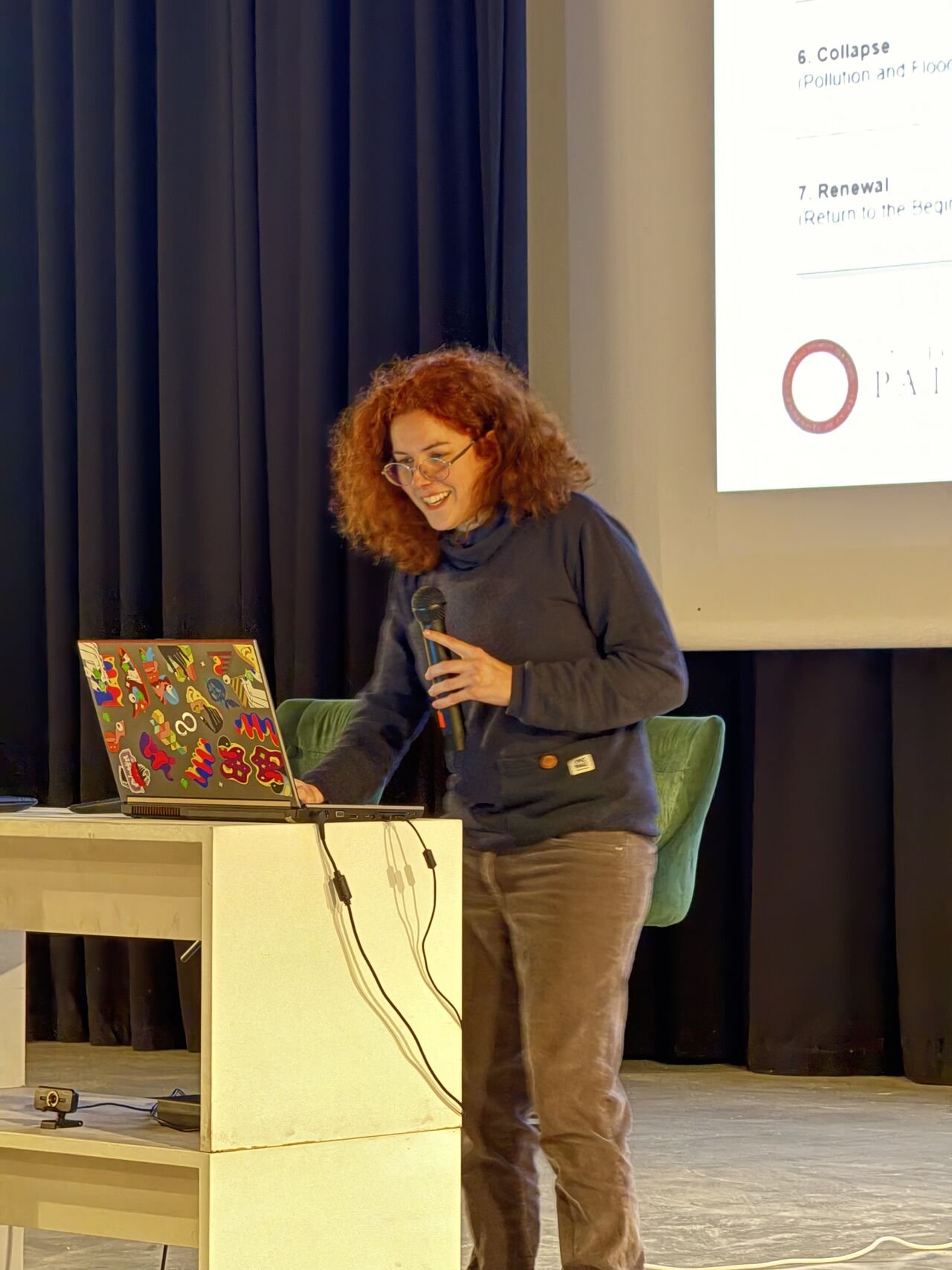
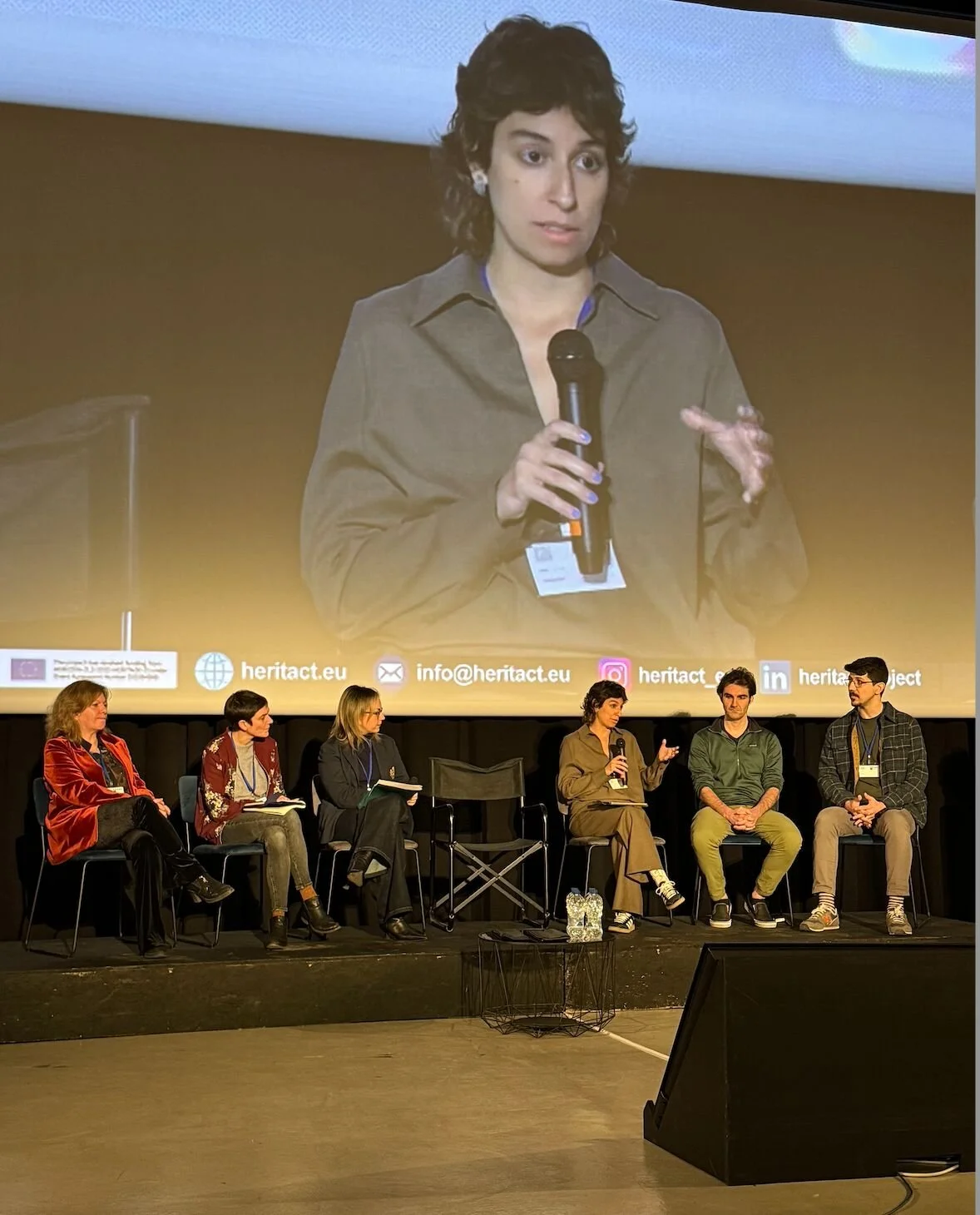
That sense of continuity was further deepened during the Open New European Bauhaus Day that followed.This event offered a timely opportunity to reflect on how HeritACT has engaged with and operationalised the NEB values of Sustainability, Inclusion and Aesthetics in heritage-led urban transformation.
Across discussions, a shared understanding emerged: heritage is not only a matter of conservation. It is a governance challenge, a social process, and a responsibility towards future generations.
Sustainability was framed not as a building-level performance metric, but as a systemic, city-scale concern. Contributions highlighted the limitations of conventional life-cycle assessments when applied to heritage contexts, advocating instead for approaches that foreground social value, community practices, and long-term societal impact.
Inclusion was addressed as a structural condition rather than an optional layer. Discussions emphasised the need to engage communities, including children, youth, and marginalised groups, throughout all phases of heritage reactivation, from problem framing to implementation. Accessibility, language, memory, and everyday practices emerged as critical enablers of meaningful participation, while arts and creative methods were recognised as powerful tools to articulate intangible heritage and shared values.
Aesthetics, meanwhile, moved beyond questions of form or visual appeal. Beauty was discussed as a methodological and epistemic dimension of transformation, something that emerges through co-creation, challenges dominant narratives, and expands collective imaginaries. Particular attention was given to emerging efforts to assess aesthetic impact, including frameworks that integrate emotional, experiential, and even spiritual dimensions alongside more conventional indicators.
Across all three NEB values, a central conclusion resonated strongly with HeritACT’s core approach: the most consequential decisions in heritage-led transformation happen at the very beginning. Effective participation requires a prior, rigorous understanding of each place’s significance, values, and constraints, a clearly articulated “why” before any “how”.
Rather than starting from predefined solutions, HeritACT has consistently tested governance models grounded in contextual understanding, stakeholder engagement, and iterative learning. In doing so, the project contributes concrete insights into how NEB values can be meaningfully embedded in real-world heritage reactivation processes across Europe.
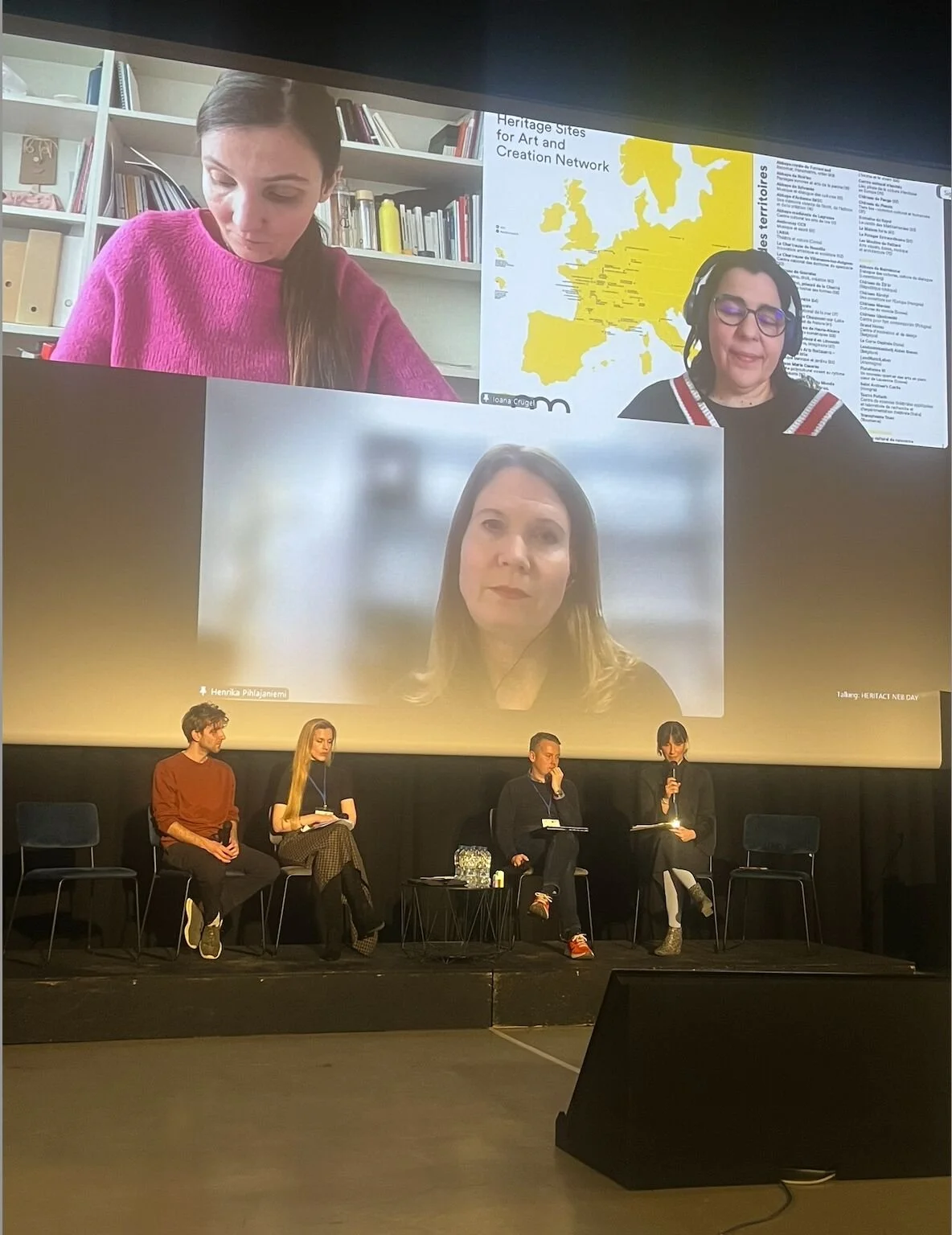
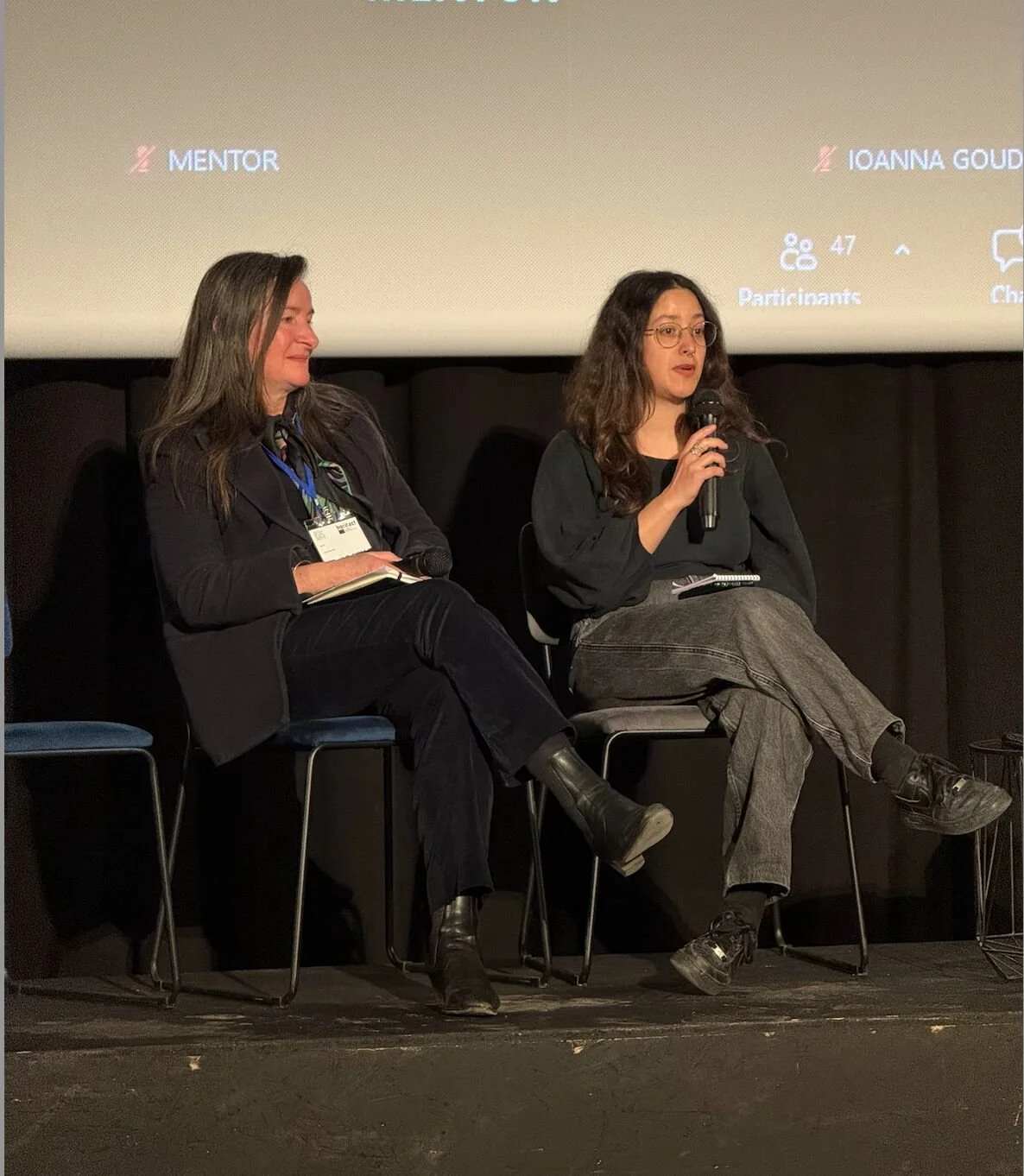
Activation events and social gathering
If Thursday and Friday were about reflection and synthesis, Saturday brought HeritACT fully into the public realm.
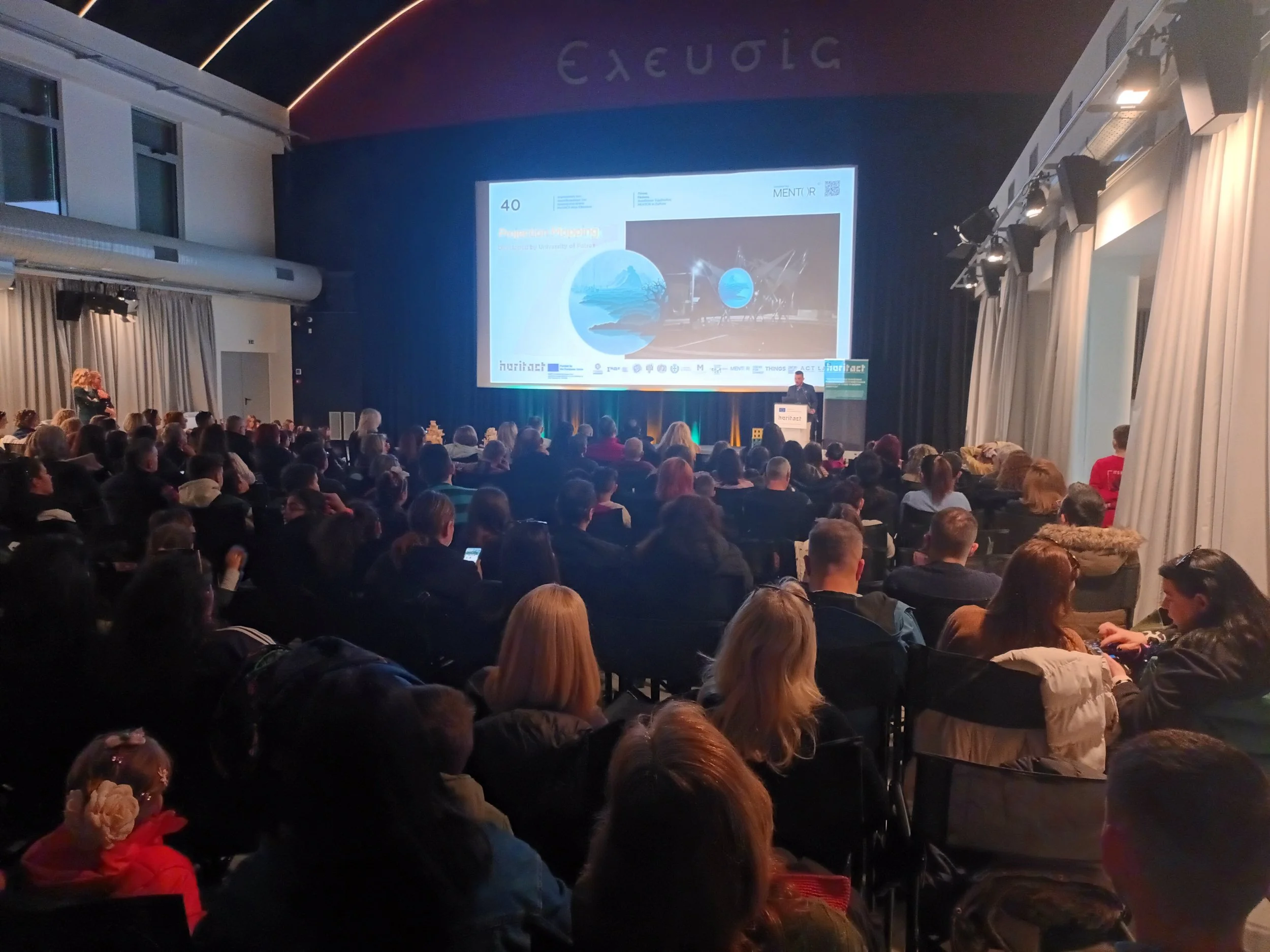
The day began with an open presentation of the project’s results, bringing together schools, partners, and local stakeholders in the same cinema that had hosted the final General Assembly. This public moment was not simply a dissemination exercise, but a recognition of the many voices that have actively shaped the project. The student awards ceremony that followed honoured young participants who took part in co-design and activation workshops, acknowledging their role not as beneficiaries, but as co-creators of heritage futures.
Later in the afternoon, a thematic walk unfolded along Elefsina’s Coastal Industrial Front, a space layered with histories of labour, industry, memory, and transformation. Through storytelling and community testimonies, the walk offered participants a way to read the territory beyond its physical form, as a living archive shaped by everyday practices and collective experience.
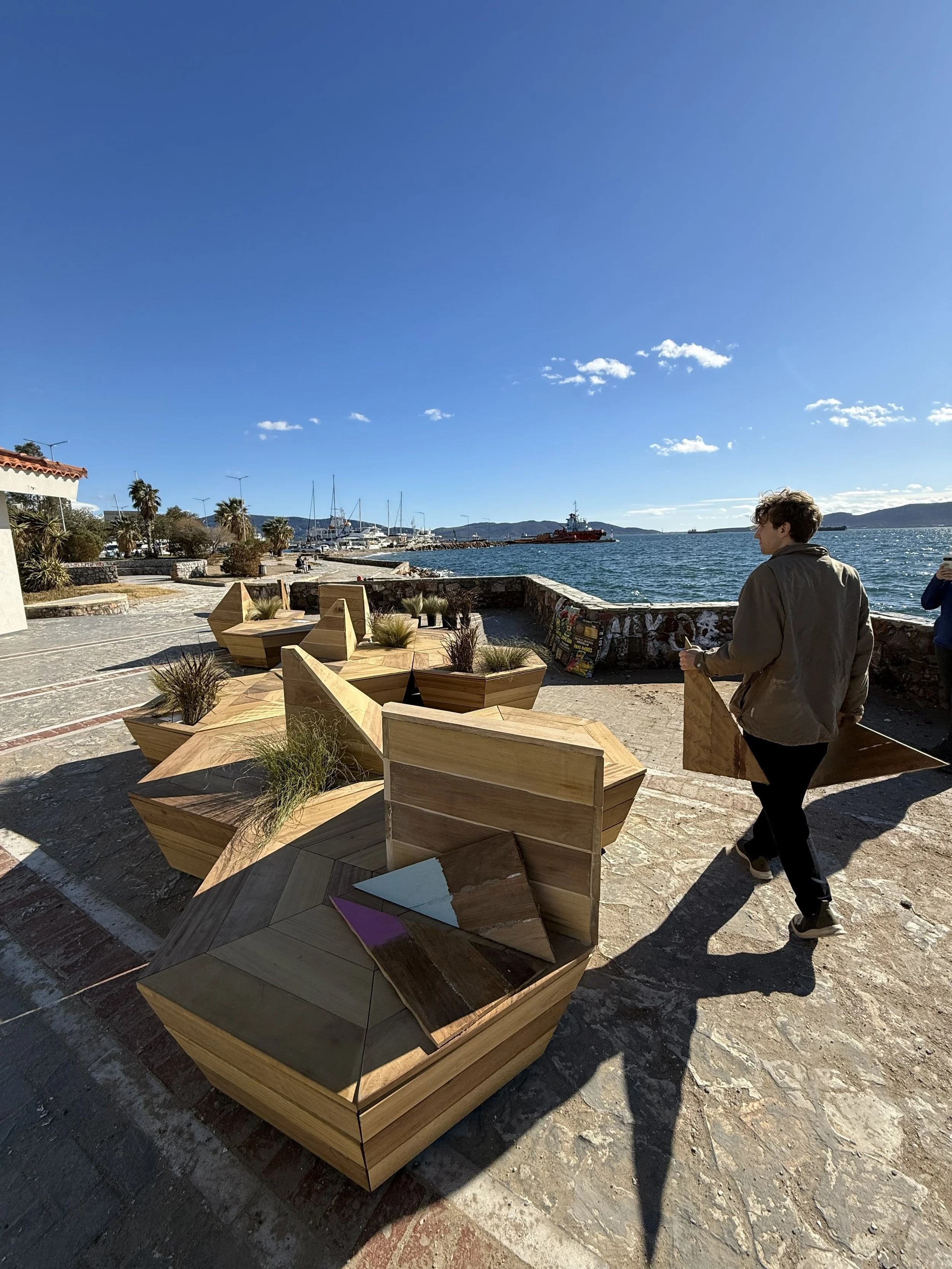
The walk concluded at the Old Canteen, where participants were invited to discover mobile furniture developed through a series of co-creation workshops with local communities. This moment made tangible one of HeritACT’s key principles: that design interventions gain meaning not through their form alone, but through the social processes that shape, adapt, and inhabit them.
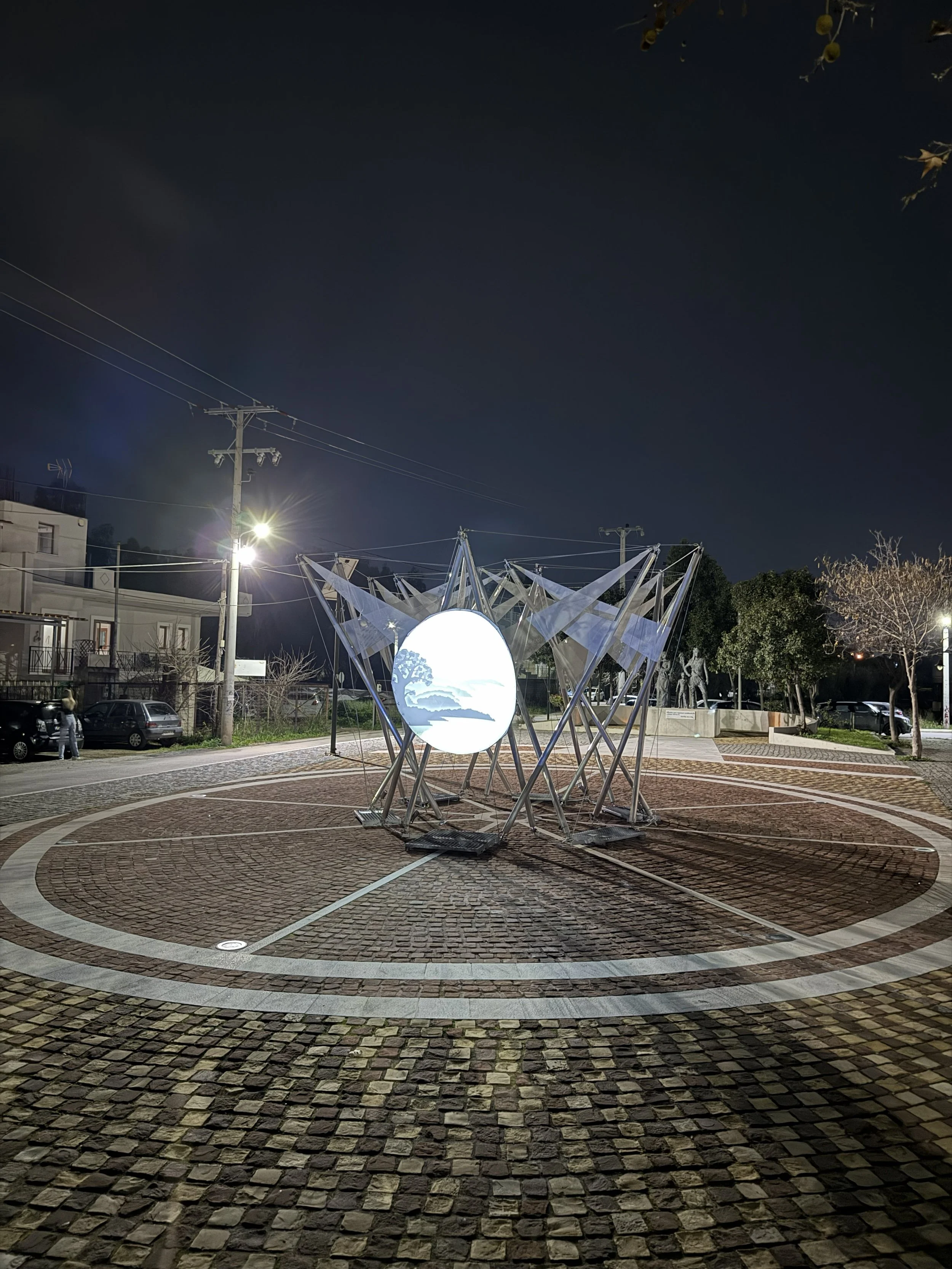
As evening fell, a projection mapping installation transformed Pontic Greek Genocide Square into a shared audiovisual space. Shaped by multiple places, memories, and voices, the installation wove together narratives from Elefsina, Ballina, and Milan, encapsulating HeritACT’s translocal dimension: a commitment to connection without homogenisation, where local heritage stories resonate across geographies while remaining deeply rooted in place-specific identities.
While Elefsina served as the physical and symbolic anchor for these days, HeritACT’s legacy extends well beyond the city. The Saturday events marked the beginning of a broader series of activation moments that will continue in the coming weeks across the other two pilots of the project, Ballina, and Milan, each adapting shared methodologies to their own cultural, social, and spatial contexts.
As HeritACT moves from project closure to ongoing impact, what remains is not a fixed set of outputs, but a way of working: one that starts from meaning, foregrounds people and place, and treats heritage as a living, evolving resource for urban futures.
