
Water as a flowing memory to bridge past and future
We like to think of water as a living canvas: something that flows and adapts to a constantly changing landscape, moulding its shape, absorbing new flavours and components, yet always keeping its essence. This metaphor resonates strongly with the HeritACT journey, which over the past three years has explored how local identities can be infused with the needs of a more promising future. It is also through water that today’s story connects inhabitants and historic places to the shared practice of rethinking urban spaces, their anchored legacies, and the ways traditions can be repurposed into inspiring new landscapes.
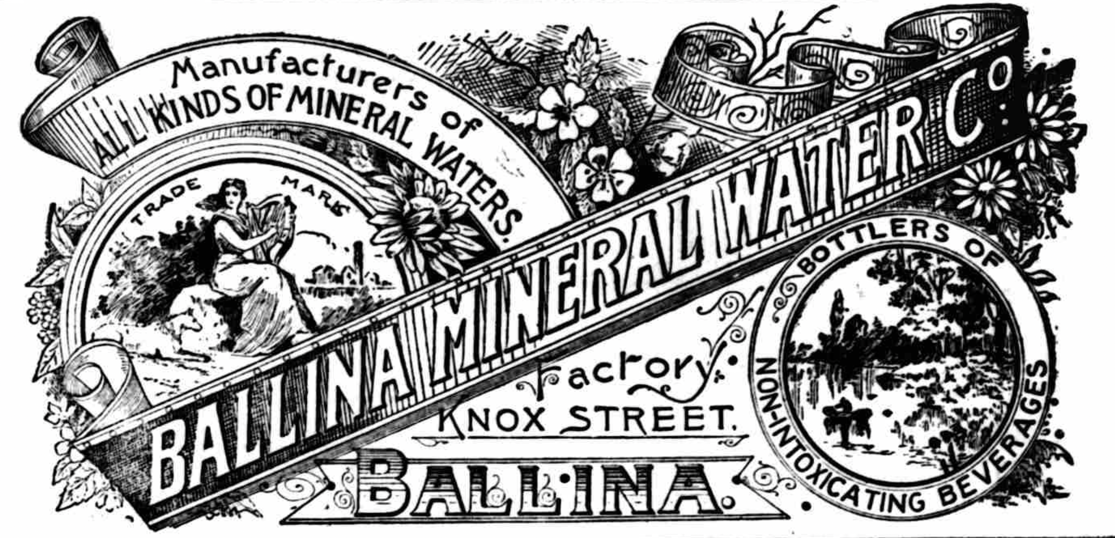
Almost everyone in Ballina has a story about Ruddy’s, the popular nickname for the Ballina Mineral Water Company. The word heritage feels too formal and too narrow to capture its legacy, because what the factory delivered was life itself: bottles, crates, work shifts, flavours, small rituals, and reliable work. For decades, it was a family firm and a local economy in miniature.
Paddy Crean worked there for 42 years.
“Funnily enough I always look in the door when I’m passing, I have a quick peep … I have happy memories. I’m 86 now, you know … Grand place, nice people, family firm. Very friendly, ’twas indeed. Happy working there.”
On Pearse Street, just a few steps from the everyday rhythm of Ballina (County Mayo, Ireland), the old yard still holds a particular kind of silence. Not empty, just attentive. It’s the kind of place where you can almost hear the clink of glass bottles being shifted, the soft hiss of a siphon, or a lorry reversing carefully into position. And the pauses in between, when people queued, chatted, and waited their turn. The Ballina Mineral Water Company is no longer operative, but it once did something quietly powerful: it bottled water, and stitched people into a shared routine that later became memory.
There is also a deeply democratic detail at the heart of this story. In the early years of the 20th century, Hugh Ruddy, one of the family owners, sank a well on the premises, and for nearly eighty years people were invited to come and help themselves to pure mineral water.
“On a Friday now there’d be a queue going up to the well, a spring well right in the middle of the yard,”
says Paddy.
Before bottled water became commonplace, Ballina people already shared a taste for good water, and a public space where it was fetched. The Water Company was not only an industrial site. It was a meeting point, a place where a town practised being a town.
Barbara Varley, a local from Ballina, remembers being sent there as a child:
“You walked through the gate, in through that … archway, and in … towards the back and in on the right, the tap was there on the wall … Well water was considered really good for you.”
HeritACT’s core claim is simple but demanding: bridging the past and the future of cities through cultural heritage. Not by freezing beautiful places and traditions in time, but by understanding what they mean to people, and using that meaning to build new forms of attachment, inclusion, and collective imagination. In Ballina, this lens starts from the town’s historic core, where natural and built environments are deeply intertwined, and asks how these relationships can be reactivated through participatory, culture-led regeneration.
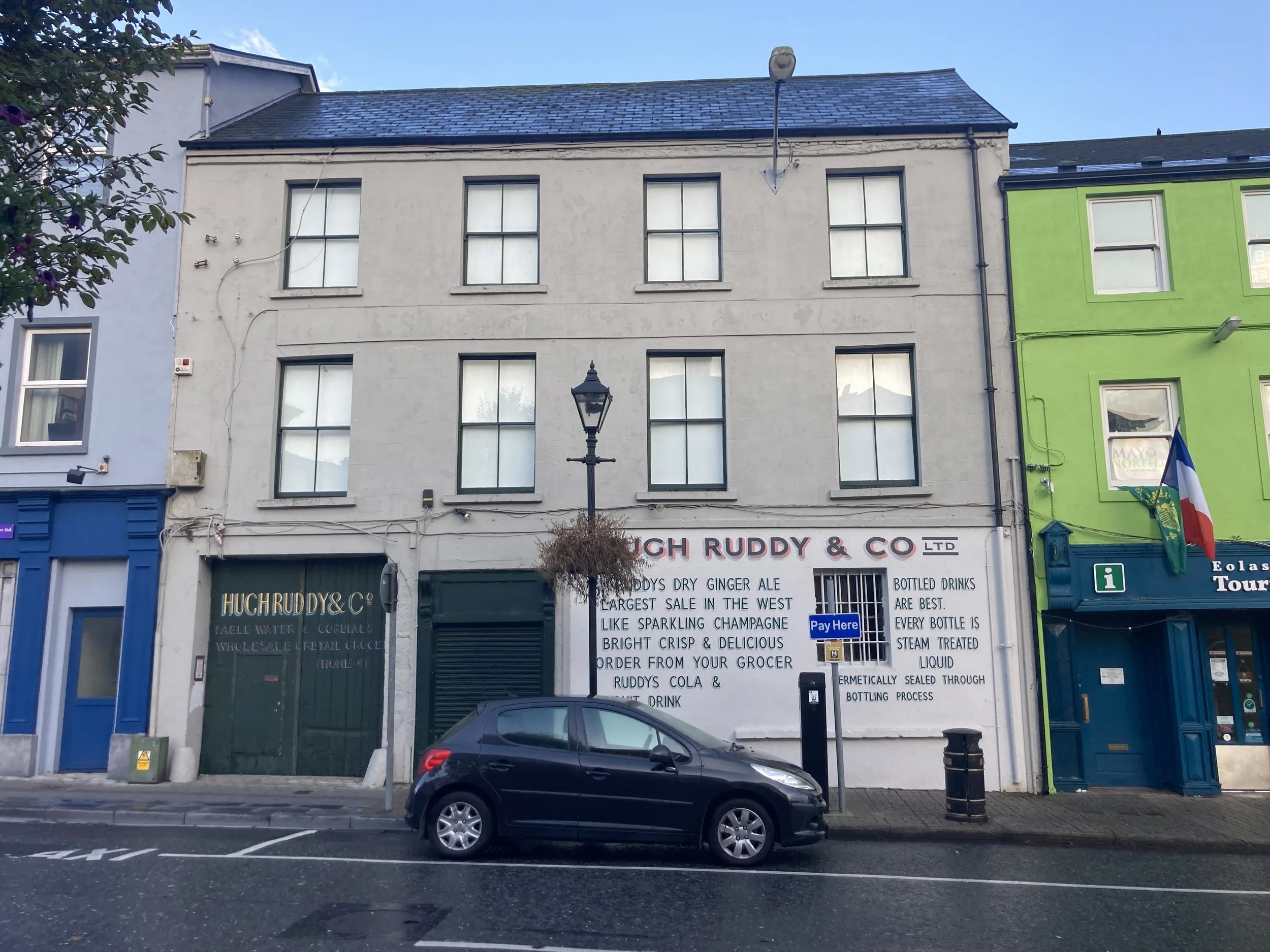
That is why the Water Company matters. Here, water is not just a metaphor, it is the shared substance of daily activity. The question HeritACT helps Ballina ask is straightforward: what would it mean to bring that sharedness back today, under new conditions and with new communities?
The factory sold flavoured minerals such as Ideal lemonade and orangeade, as well as bottled beers. For Barbara, those products are inseparable from the feeling of being from Ballina, especially when she encountered them far from home:
“Nobody really used the parlour, except for special occasions … and there was a little nook, and … crates, and in it was the Ideal lemonade … And I remember thinking, oh! they’re from Ballina … You would see the trucks going in and out on the road …”
Even taste becomes a map, one that leads back to place.
“A crisp taste.”
“A refreshing taste, cool. Cool, refreshing.”
That’s water from the wells of home.
HeritACT’s approach in Ballina points towards culture-led regeneration: not only preserving places, but creating conditions for people to meet them differently, through interventions, shared activities, and new uses that invite participation. The project has helped to open a space for a vital civic habit: reflecting together before deciding what the future should look like. Significantly, this transformation has unfolded within places identified as having high historic value. The Water Company, alongside sites such as the Convent of Mercy or the Library (built on the former Moy Hotel site), becomes a fitting point of reference, reminding everyone that Ballina has always been shaped through shared infrastructure and shared routines.
For Pat Rouse, a local shop owner, the factory enabled a local economy held together by trust, proximity, and continuity, where simple problems did not require complicated systems:
“If you had a busy market day or a fair day and you ran short … you could just run down to them … you’d sign the docket and it’d be added on to your account … In the early days … you always gave the business to the local crowd.”
What is most striking about the voices that remember the Water Company is how quickly they move from what happened to what it felt like. In Ballina, heritage is not a distant timeline; it is collective memory. And at the centre of that memory is water itself, remembered not only as taste, but as a social moment. The queue at the well was never just about utility. It was a space where people did what communities do: acknowledge one another.
It is in understanding these lived experiences that HeritACT’s bridge becomes tangible. The past is not valuable because it is charming, but because it reveals how belonging is practised, through encounter, shared routines, and collective action. If the Water Company offers one lesson for the present, it may be this: collaboration is not a project activity; it is a local skill.
HeritACT’s contribution has been to make this intersection actionable today: treating heritage as an asset for civic participation, aligning regeneration with the Green Deal and the New European Bauhaus, and ensuring that renewal is sustainable, inclusive, and rooted in place. Participatory approaches reintroduce spaces into community memory and lived experience, not as nostalgia, but as a foundation for new decisions and new relationships.
The story of the Water Company does not end with a neat conclusion. That is precisely the point. Its value lies in what it can still do: invite Ballina into a more collaborative and reflective present, where heritage is not only remembered, but actively used to rehearse better futures. And perhaps this is the most faithful expression of HeritACT’s promise, not to turn heritage into a display, but into a shared conversation, where human value continues to illuminate the way forward.
